
PT
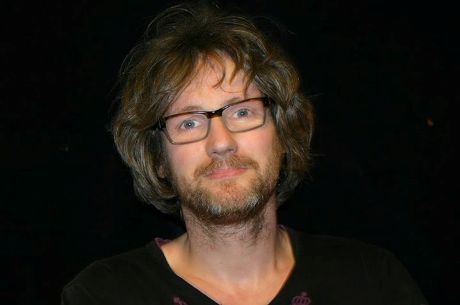
Entre muitas coisas, Elmar Kuiper (b. 1969) é enfermeiro psiquiátrico, artista visual, dramaturgo, cineasta e poeta. Desde os seus primeiros poemas Frisian em Hertbyt (2004) até a coleção holandesa Ruimtedier (2016), Kuiper parece capaz de combinar humor e sinceridade, o absurdo e a sensibilidade, de uma maneira completamente original e pessoal. Com seus intensos e por vezes ligeiramente estranhos poemas, e desempenho inexpressivo, ele foi uma revelação em muitos palcos nacionais e internacionais, incluindo o Festival de Poesia StAnza da Escócia e do Festival Internacional de Poesia, em Roterdão.
Os poemas de Elmar Kuiper (1969) fornecem ampla evidência de originalidade, nervo e um forte toque associativo. Os poemas lidam com grandes temas: saudade, amor e morte, poder e impotência. Em sua mais recente coleção Frisian, Granytglimkes (2011) e Hiemsiik (2015), os poemas são um pouco mais acessíveis do que no seu trabalho anterior, com imagens fixas, mas talvez menos fantasioso e com as emoções que são simultaneamente pessois e universais. O poeta mostra a sua vulnerabilidade e incerteza para com um grande amor no poema “fechado”, que começa com uma imagem bonita da noite que espalha uma camada de batom nas nuvens.
O trabalho de Kuiper é caracterizado desde o início por seu uso original de perspectiva poética. Seus poemas raramente têm como ponto de partida um Eu, utilizando meios líricos para formar experiências pessoais. Muitas vezes, ele procura o contrário, o tom objetivo, ou a posição reflexiva. No poema “O tiro para o homem que cai”, ele adota o ponto de vista do tiro de espingarda e a bala que atinge um homem. Mesmo assim, este é um poema altamente sensível e a sensibilidade surge precisamente porque o poema deseja animar objetos mortos. Ao fazê-lo quase consegue transformar a bala num ser compassivo.
Na sua escrita tudo é suscetível à dúvida, nada está enraizado no mesmo lugar. “Essa resposta envia-me de volta ao cavalete”, termina Elmar num poema. “Nesse caso, atrevo-me a arriscar, observamos um desenho onde a interação de linhas não assume contornos fixos.”
Com o apoio da TRESOAR
—
EN
Among many things, Elmar Kuiper (b. 1969) is a trained psychiatrical nurse, visual artist, playwright, film maker and a poet. From his first Frisian poems in Hertbyt (2004) right up to his upcoming Dutch collection Ruimtedier (2016), Kuiper seems able to combine humour and sincerity, absurdism and sensitivity, in a completely unique and personal way. With his intense and somethimes slightly weird poems, and his deadpan performance, he was a revelation on many national and international stages, including Scotland’s Poetry Festival StAnza and the Poetry International Festival in Rotterdam.
The poems of Elmar Kuiper (1969) provide ample evidence of originality, nerve and a strong associative flair. They deal with large themes: longing, love and death, power and impotence. In his most recent Frisian collection, Granytglimkes (2011) and Hiemsiik (2015), the poems are somewhat more accessible than in his previous work, with still rich but perhaps less fanciful images and with emotions that are simultaneously personal and universal. The poet displays his vulnerability and uncertainty towards a loved one in the poem ‘closed’, which begins with a beautiful image of the evening that smears a layer of lipstick on the clouds.
Kuiper’s work is characterised from the outset by its original use of poetic perspective. His poems seldom have as their point of departure an I-figure using lyrical means to form personal experiences. Often he seeks the opposite, the objective tone, or reflective position. In the poem ‘Does the shot stop the man who falls’ he adopts the point of view of the rifle shot and the bullet that hits a man. Even so, this is a highly sensitive poem and the sensitivity arises precisely because the poem wishes to animate dead objects. In so doing it almost succeeds in turning the bullet into a compassionate being.
In his writing everything is susceptible to doubt, nothing is rooted to the one spot. “that reply sends me back to the drawing board”, he playfully ends the poem. In that case, I would dare to hazard, we are looking at a drawing where the interplay of lines never assumes fixed contours.
With the support of TRESOAR
 Portugal SLAM